
Google Ads for Doctors: A Practical Campaign Structure for Medical Practices

A Google Ads account for a medical practice should be easy to explain to the clinic manager: which services receive budget, which searches are relevant, where each ad sends someone, and what happens when an inquiry arrives? If those questions cannot be answered from the campaign structure, the account is probably harder to manage than it needs to be.
For most clinics, start with a small number of Search campaigns grouped around meaningful service or location differences. Within each campaign, use closely related ad groups, accurate ads and relevant landing pages. Measure genuine inquiry actions and reconcile them with bookings. Create a separate campaign only when you need different budget control, geography, objective, or operating arrangements, not for every keyword variation.
Table of contents
- A practical Google Ads structure at a glance
- Before opening Google Ads, check five clinic realities
- When should doctors create a separate campaign?
- Example: a fictional two-location ophthalmology practice
- Build ad groups around patient intent, not a long keyword dump
- Connect ad messaging to a real service page
- Set location, bidding and budget controls around clinic operations
- Measure inquiries, bookings and attended visits separately
- A 16-point launch checklist for doctors and clinic managers
- The first 30 days: review evidence, not just dashboards
- When to restructure and when to fix the patient journey instead
- Frequently asked questions about Google Ads campaign structure for doctors
- Make the campaign structure work for your clinic

This is an operational planning guide for doctors, practice owners and healthcare marketing teams. It does not establish advertising eligibility for a particular clinical service or promise a number of appointments.
A practical Google Ads structure at a glance
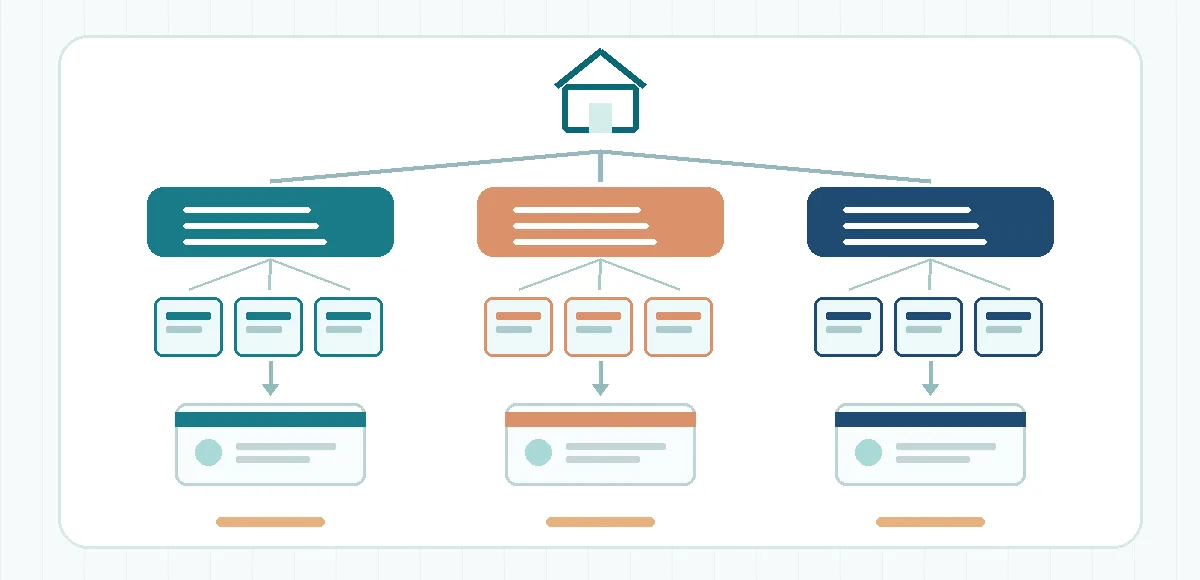
Google Ads is organized in layers. Each one should make the next decision simpler, from service availability to the appointment desk.
| Layer | What belongs here | Decision for a medical practice |
|---|---|---|
| Account | Ownership, access, billing, conversion definitions and policy checks | Who owns the account, and what counts as a meaningful inquiry? |
| Campaign | Objective, budget, bidding, geography and major service grouping | Which services or locations actually need separate control? |
| Ad group | One coherent search intent theme | Does every keyword in this group deserve a similar ad and destination? |
| Responsive search ads and assets | Accurate service, appointment, location and provider messaging | Can every claim and opening-hours promise be supported? |
| Landing page and reception route | Service explanation, contact route, scheduling availability | Can the practice answer and qualify the inquiry? |
| Measurement | Primary conversions, secondary signals and booking reconciliation | Which inquiries turn into bookings and attended visits? |
The structure is a map, not a rule that every medical specialty must have its own campaign. Google itself advises simplifying accounts and keeping ad groups relevant rather than routinely separating every match type or device. See Google Ads account-setup guidance.
Before opening Google Ads, check five clinic realities
Service readiness. Write down the precise services you intend to advertise, who delivers them, and any clinical restrictions. A clinic that lists consultations it cannot currently provide will waste its team’s time even if the clicks appear relevant. Have the service owner approve the list and the wording patients will see.
Appointment capacity. Record which providers accept new patients, the appointment types and days actually available, and whether the reception team can respond. A “same-day” message should never appear without an operational way to honor it. If the practice has different intake capacity at two locations, that may justify different campaign controls.
Search geography and language. A medical practice normally wants inquiries from people it can serve. Define realistic travel areas for in-person care, language coverage and opening hours. The distinction between people in a location and those merely interested in it matters; Google describes the targeting options in its location guidance.
A service specific destination. Every significant ad group needs a page that answers the search: what the service involves, who provides it, clinic location, appropriate credentials, availability and an accessible way to make an inquiry. Avoid sending a cataract-consultation ad to a generic homepage that leaves the visitor hunting for the right department.
Policy and measurement readiness. Review the advertised service, wording, proposed audience settings and any certification requirements before launch. Decide what will be measured without exposing patient or diagnosis details to advertising systems. Google treats health as a sensitive category in personalized advertising, and eligibility varies by service and location. Read its health targeting policy and healthcare and medicines policy.
If any of these five checks fails, a new campaign is not automatically the next step. Fix the underlying issue, narrow the scope, or pause the affected service.
When should doctors create a separate campaign?
A useful campaign split creates a real management benefit. The decision is not simply whether two services use different terminology. Ask the following questions in order.
| Question | If yes | If no |
|---|---|---|
| Must this service have its own budget ceiling or priority? | Consider a separate campaign | Keep the service as a distinct ad group when its intent is sufficiently close |
| Does it serve a different geography, language or appointment schedule? | Consider separate campaigns or settings where justified | Reuse a shared targeting approach |
| Does it need a different bidding objective or trustworthy conversion goal? | Separation may be justified after checking volume and measurement | Avoid a split that creates small, weakly informed campaigns |
| Do the searches require different clinical claims, landing pages or approvals? | At minimum separate ad groups and destinations; campaign separation may help governance | Group closely related terms together |
A smaller structure can be better. Splitting one clinic into eight campaigns with limited search and conversion data makes budgeting, testing and reporting less stable. Conversely, putting genuinely distinct services in one generic ad group makes the message vague. A helpful default is to keep campaigns broad enough to manage and ad groups specific enough to be useful.
Use the campaign split decision helper to record the reasons for splitting or consolidating. It is a planning aid, not a Google Ads recommendation engine.
A separate branded-search campaign may be appropriate if there is real demand for the practice or physician name and a reason to manage it independently. Do not assume every clinic needs one or that branded clicks represent new-patient demand.
Example: a fictional two-location ophthalmology practice
Imagine an ophthalmology practice with two branches. Both offer routine eye examinations and cataract consultations. Branch A has weekday capacity for both; Branch B has eye-examination capacity but currently refers cataract consultations to Branch A. The names and structure below are examples for teaching only, not a real DigiTaTop account or an approved clinical advertising plan.
| Campaign or grouping | Ad-group intent | Landing destination | Operational rule |
|---|---|---|---|
| C01 : General eye examinations, both branches | Eye exam near me; eye examination appointment | A page that clearly presents both branches, providers and appointment routes | Reception confirms branch and availability before booking |
| C02 : Cataract consultation, Branch A | Cataract consultation; ophthalmologist consultation for cataract | A clinically approved service page for Branch A | Do not send paid consultation inquiries to Branch B if it cannot offer the appointment |
| Optional : Practice-name searches | Practice name; named ophthalmologist, where authorized and accurate | About, provider or appointment page matching the query | Keep branded reporting separate from nonbranded demand when useful |
This structure does not require a campaign for every doctor, every match type or every location modifier. If one service has little data or no separate budget need, grouping may be more useful. If two branches have different hours and response routes, separate controls can become worthwhile.
The practical approval question is whether a receptionist could look at the incoming inquiry and know the intended service, branch and next action. If not, refine the ad group, destination or tracking before adding more campaigns.
Build ad groups around patient intent, not a long keyword dump
An ad group should bring together searches that deserve substantially the same answer. For an eye-examination service, searches about scheduling an eye exam can share a relevant service page. Searches about a provider’s biography may deserve a different response. Broad research about eye-health symptoms does not automatically have the same conversion intent as a request for an appointment.
| Search theme | What the reader likely wants | Page response |
|---|---|---|
| Provider/service + location | To find a clinician or service nearby | Service, clinic address and contact access |
| Appointment or accepting-patients queries | To schedule an eligible visit | Availability, intake requirements and booking route |
| Procedure/consultation research | To understand suitability and next steps | Accurate service information and a consultation option, where appropriate |
| Clinic or doctor name | To verify the practice or reach a known provider | Verified profile, contact and appointment information |
Google’s keyword matching documentation distinguishes broad, phrase and exact match. The choice is a balance between reach, control, query quality and the reliability of conversion feedback, not a universal rule that doctors must use only one type. Review the actual search terms that triggered ads before expanding coverage.
Negative keywords need clinical judgment. Exclude searches clearly outside the business’s services or geography, such as jobs or equipment shopping where those are genuinely irrelevant. Do not blindly block symptom or treatment words; they may indicate legitimate interest, and careless exclusions can hide important demand. Keep an evidence record for major exclusions.
Connect ad messaging to a real service page
Good healthcare ad copy is specific without making promises. The ad and landing page should agree on service name, location, provider availability and the requested action. For example, when planning diagnostics advertising services for a US imaging center, send each ad to a page that names the scan, the branch offering it and how to book. A clear booking prompt can coexist with honest qualifications about suitability and insurance confirmation.
Before an ad goes live, check these points together:
- Claim accuracy: Are credentials, prices, turnaround or appointment-availability statements current and approved?
- Relevance: Does the ad answer the associated search theme, and does the landing page address that precise service?
- User choice: Can a patient find the practice’s phone number, office address, opening hours, accessibility information and a working contact route?
- Asset suitability: Are location, call, sitelink and other assets relevant and correctly maintained?
- Landing-page safety: Does the page avoid asking for unnecessary sensitive medical details in an advertising lead form?
Google’s responsive search ad guidance explains that assets may be combined in different orders. Write headlines and descriptions that remain accurate in different combinations, not a series of fragments that require one fixed display order. Check automated text and asset settings where applicable rather than assuming generated material will always be medically appropriate.
Set location, bidding and budget controls around clinic operations
Start location settings from the real service area, not an arbitrary radius seen in another campaign. For locally delivered care, presence-focused targeting may be more appropriate when inquiries from people outside the service area would create operational waste. Review Google’s location options and the location report; no setting guarantees every click comes from a resident.
Ad schedules should reflect how inquiries will be handled. A clinic may still accept form submissions after hours if the response expectation is clear. A phone led campaign needs people who can answer calls during the times it advertises. Distinguish a missed call from a successfully connected inquiry.
Choose bidding around the campaign’s available evidence. Optimizing for form-button clicks can teach automation the wrong lesson when the practice values completed inquiries or bookings. Before selecting a conversion based bid strategy, verify that the intended conversion action is working and is relevant to the specific campaign. Google’s conversion-goal guidance explains how account default and campaign specific goals affect bidding.
Budget planning belongs at campaign level only where independent control is necessary. The spending required for a useful test depends on actual local search demand, auction prices and the quality of the appointment funnel. There is no reliable universal daily budget or guaranteed cost per booked patient. For the full budgeting method, see DigiTaTop’s healthcare Google Ads cost guide.
Measure inquiries, bookings and attended visits separately
A medical practice should define the difference between an advertising conversion and a patient outcome. A counted phone click may not be a completed call. A completed inquiry may not qualify for the service. A booking may not result in an attended appointment.
| Stage | What to confirm | Useful owner |
|---|---|---|
| Ad contact action | Submitted form, completed call or other meaningful contact event | Marketing / analytics |
| Qualified inquiry | Suitable service, geography, availability and contact details | Reception / intake |
| Booked appointment | Confirmed booking in the practice scheduling system | Scheduling team |
| Attended visit | Appointment actually attended, where the practice can report appropriately | Practice operations |
Primary and secondary conversions are not interchangeable. Google states that primary actions can be used for bidding when their goal is selected, while secondary actions are ordinarily reported for observation; there are custom-goal exceptions. The wrong settings can optimize spend toward noisy contact events. Read Google’s primary/secondary conversion guidance.
Use privacy preserving reporting and avoid sending patient names, diagnosis information or other sensitive data to advertising platforms without a verified lawful basis and appropriate safeguards. In the US, HHS tracking guidance describes obligations and expressly notes a 2024 court ruling limiting part of its scope. In the UK, the ICO’s online-advertising guidance explains consent requirements for relevant storage/access technologies. Requirements vary by jurisdiction and implementation.
The point of this measurement system is not to upload a patient spreadsheet into Google Ads. It is to help the clinic compare channel activity with verified appointment outcomes using an approved data handling process.
A 16-point launch checklist for doctors and clinic managers
Use this short list with the person who owns advertising, someone who can verify clinical messaging, and the team responsible for appointments.
Service and policy readiness
- Confirm each advertised service is actually available at the listed location.
- Review the relevant Google healthcare policies, local rules and any certification requirement.
- Obtain factual approval for credentials, claims, fees and availability statements.
- Confirm responsible account ownership, administrator access and billing visibility.
Campaign and search structure
- Define one meaningful objective and business owner for each campaign.
- Document why each campaign needs its own budget, geography or goal.
- Group keywords by related intent; remove clearly irrelevant demand thoughtfully.
- Check location settings, languages and operating or response schedules.
Ads, pages and contact routes
- Match every important ad group to a genuinely relevant service page.
- Test all public phone, form and appointment routes on mobile.
- Check the final ad and asset wording against actual clinic services.
- Confirm that staff can answer or appropriately queue the inquiries generated.
Measurement and governance
- Test each intended primary conversion and check for duplicate events.
- Separate inquiry counts from qualified inquiries and booked appointments.
- Record the baseline, account changes, responsible owner and next review date.
- Agree on stop/pause conditions for policy issues, broken destinations or unavailable appointment capacity.
Download the campaign-structure planning worksheet or the editable campaign matrix. Both help record service scope, proposed splits, landing pages, conversion goals, intake owners and launch decisions.
The first 30 days: review evidence, not just dashboards
A launch plan should specify what to inspect, not promise that a campaign will find its ideal cost per patient on a fixed calendar.
| Review point | Practical question | Next action |
|---|---|---|
| Before launch | Do permissions, policy eligibility, pages, call routes and tracking work? | Fix blockers before enabling the affected campaign |
| Early delivery | Which search terms, locations and devices are generating relevant visits? | Check mismatches; revise negatives or settings based on evidence |
| First reconciled inquiries | Did staff receive, qualify and book the contacts Google Ads counted? | Investigate missing handoffs and duplicate conversion signals |
| Subsequent reviews | Do service lines need different budgets or is the original structure still sufficient? | Split or consolidate only when there is a business and measurement reason |
Keep a change log. Avoid deciding that a campaign has succeeded merely because impressions rose, or failed merely because a small early sample generated no booking. Clinical appointment demand can be uneven, and conversion reporting may lag. Reconcile like-for-like periods and account for scheduling capacity.
When to restructure and when to fix the patient journey instead
Adding campaigns will not correct a phone nobody answers, a form that fails, a misleading service page or an account optimizing for duplicate actions. If Google Ads reports conversions but the clinic has few bookings, trace an example from conversion event to inquiry log to scheduling outcome. This diagnostic is usually more revealing than renaming campaigns.
A separate campaign may make sense when one service repeatedly consumes budget needed by another, one location has materially different capacity, or policy and advertising arrangements require different controls. An ad-group change is often sufficient when two sets of searches need different ads or pages but can share a budget, geography and optimization objective.
If your clinic is weighing medical PPC against SEO, compare the two channels before allocating budget. This article addresses the next step: building a paid search account that the practice can understand and operate.
Frequently asked questions about Google Ads campaign structure for doctors
Should every medical service have its own Google Ads campaign?
No. Use a separate campaign when different services need meaningful control over budget, geography, bidding goals or operating arrangements. Closely related services can often remain in distinct ad groups within one campaign, with suitable ads and pages.
Should a doctor run one campaign per clinic location?
Only if it improves control or relevance. Branches with different opening hours, providers, appointment availability or service areas may merit a split. Similar branches can sometimes share a campaign with clearly differentiated destinations and intake workflows.
Are exact-match keywords always safest for healthcare?
Not always. Exact and phrase match can provide tighter initial control, while broader matching may uncover useful demand when measurement is reliable. All matching choices require search-term review, policy checks and clinical judgment; no match type guarantees relevance or approval.
What should be the primary conversion in a medical Google Ads campaign?
Use a verified action that reflects a meaningful business outcome and can be measured appropriately, such as a completed eligible inquiry. The right choice depends on the clinic’s systems and goals. Observe softer interactions separately and reconcile with actual bookings.
Should a clinic use remarketing audiences based on health conditions?
Do not assume this is allowed. Google restricts personalized advertising based on sensitive health information. Check the specific policy, audience type, product and country before any audience activation, and review applicable privacy law.
Can one campaign advertise multiple doctors?
Yes, when they share relevant services, geography and conversion goals. The ad and landing page must accurately represent each clinician, including availability and credentials. Separate campaigns may be justified if practice operations or budgets differ substantially.
What if Google Ads shows conversions but no appointments?
First test whether the tracked events are valid and nonduplicated. Then compare completed calls/forms with the intake log, qualification decisions, actual bookings and staff response times. A measurement or reception problem may be more important than the campaign hierarchy.
What is the best Google Ads campaign structure for a small medical practice?
Start with the fewest campaigns that allow meaningful control of service priorities and patient access. Keep ad groups focused, link to relevant pages and validate conversion measurement. Expand only when there is sufficient demand and a clear reason for a separate budget or setting.
Make the campaign structure work for your clinic
A good account is not the one with the most campaigns. It is the one where the practice can tell which service is being promoted, where the inquiry went, and whether the patient could book an appropriate appointment.
If your team is planning or reorganizing paid search, explore DigiTaTop’s healthcare PPC services or discuss your clinic’s campaign structure. The aim is a practical plan aligned with your services, operating capacity and measurement constraints.